

Florida's Save Our Homes Amendment: What the 2026 Ballot Proposal Means for Property Taxes
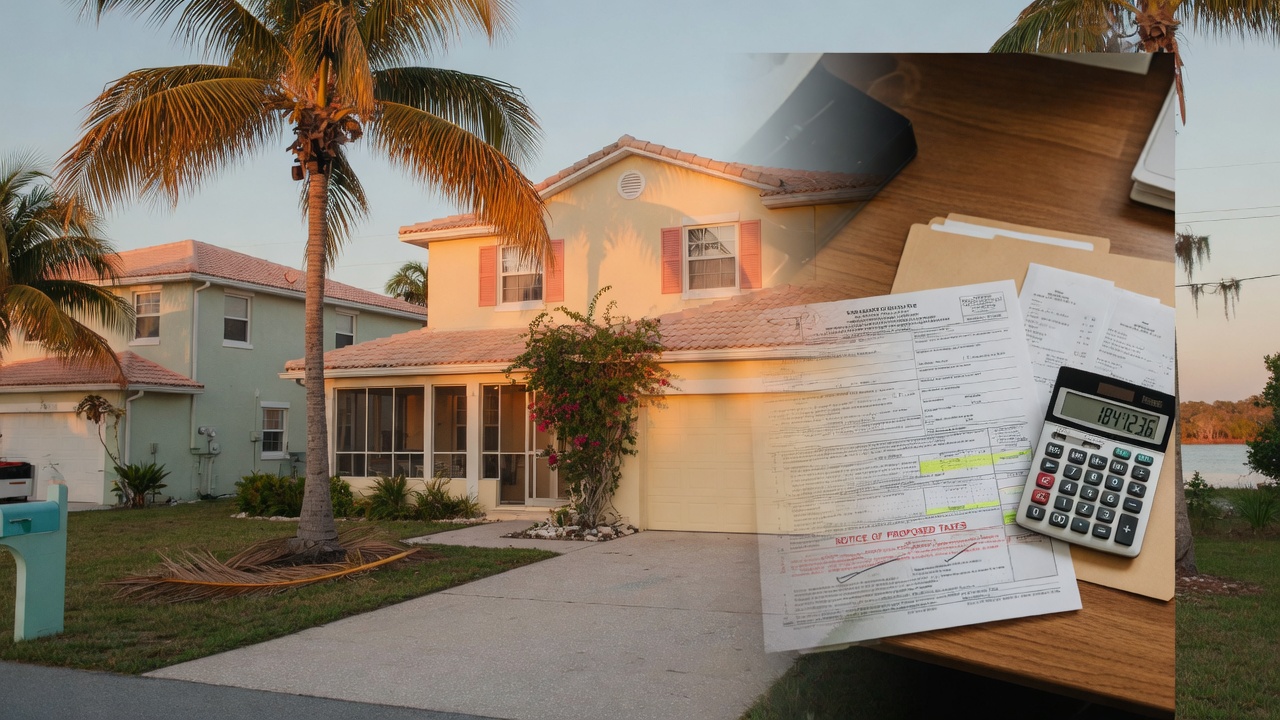
If you own a home in Florida — or are thinking about buying one — there's a major property tax proposal you need to know about. During a June 2026 special session, the Florida Legislature passed House Joint Resolution 1-F (HJR 1F), also known as the "Save Our Homes from Excessive Property Taxes" amendment. It will appear on the November 3, 2026 statewide ballot, and it needs 60% voter approval to become law. Here's what the proposal would do, how it builds on the existing Save Our Homes framework, and what it means for Sarasota homeowners.
A Quick Refresher: What Is Save Our Homes?
Before diving into the new proposal, it helps to understand the foundation it's built on. Florida's original Save Our Homes (SOH) amendment was approved by voters in 1992 and is codified in Article VII, Section 4 of the Florida Constitution. It was designed to protect homestead property owners from large, unpredictable spikes in their property tax assessments.
Key Provisions of the Original Save Our Homes Amendment
- 3% Annual Assessment Cap: The assessed value of a homestead property cannot increase by more than 3% or the percent change in the Consumer Price Index (CPI) — whichever is less — in any given year.
- Applies to Assessed Value, Not Tax Bill: The cap limits how much your property's assessed value can grow, but millage rates set by local governments can still cause your actual tax bill to rise.
- Portability: Starting in 2007, homeowners gained the ability to transfer (or "port") their accumulated SOH benefit from a previous Florida homestead to a new one — up to $500,000 — making it easier to move without losing years of tax savings.
- Reset on Sale: When a home is sold, the SOH cap protection does not transfer to the buyer. The assessed value resets to the new purchase price, and the new owner must apply for a fresh homestead exemption.
- Non-Homestead Cap: For non-homestead properties (second homes, investment properties, commercial), a separate 10% annual assessment cap applies.
For decades, the Save Our Homes cap has been one of the most valuable protections for Florida homeowners — especially in markets like Sarasota, where home values have appreciated significantly. But the 2026 proposal takes the idea of tax relief further.
What's in the 2026 Ballot Proposal?
HJR 1F, titled "Save Our Homes from Excessive Property Taxes," was passed during a special legislative session in June 2026. If approved by 60% of Florida voters on November 3, 2026, it would amend the Florida Constitution to create a new, larger homestead exemption — but with a twist for new residents.
The Proposed Changes at a Glance
- New $150,000 Exemption Beginning in 2027: An additional homestead exemption would apply to all ad valorem taxes except school district levies, exempting the first $150,000 of a homestead's assessed value.
- Increases to $250,000 in 2028: Starting in 2028, the non-school exemption would increase to $250,000 of assessed value and remain at that level thereafter.
- Five-Year Waiting Period for New Residents: Homeowners who establish Florida residency after December 31, 2026, would receive only a $50,000 homestead exemption for their first five years. After five years, they would become eligible for the full $250,000 exemption.
- School Taxes Unaffected: The existing $50,000 homestead exemption for school district taxes remains in place. The new exemption does not apply to school levies.
- Non-Homestead Cap Reduced to 5%: The annual assessment cap for non-homestead properties — including rental properties, second homes, and commercial real estate — would be lowered from the current 10% to 5%, offering additional protection from sharp assessment increases.
- Spending Growth Limits on Local Governments: The amendment would tie county and municipal spending growth to the combined rate of population growth and inflation, constraining how quickly local governments can increase their budgets.
- Existing 3% SOH Cap Stays: The original Save Our Homes assessment cap is not changed by this proposal. It continues to operate alongside the new exemption.
What This Means for Sarasota Homeowners
For existing Florida homesteaders, the impact could be significant. The non-school portion of a property tax bill — which covers county, city, and special-district taxes — could be dramatically reduced or eliminated entirely for homes with assessed values at or below the exemption threshold.
Consider a Sarasota homeowner with a homesteaded property assessed at $350,000. Under the current system, after the existing $50,000 homestead exemption, roughly $300,000 of value is subject to non-school taxes. Under the proposed amendment, starting in 2028, an additional $250,000 would be exempted — meaning only $50,000 of assessed value would be subject to county, city, and special-district taxes. That's a substantial reduction in the non-school portion of the annual tax bill.
For homes assessed at $250,000 or below, the non-school portion of the property tax bill could be eliminated entirely — a meaningful benefit for downsizers, retirees on fixed incomes, and longtime Sarasota residents who have seen their home values rise.
The Five-Year Waiting Period: What Relocating Buyers Should Know
One of the most discussed provisions of HJR 1F is the five-year waiting period for new Florida residents. If you establish residency after December 31, 2026, you would be limited to the standard $50,000 homestead exemption for your first five years — even after the larger exemption takes effect for existing residents.
This creates a clear distinction between current and future residents, and it's something anyone considering relocating to Sarasota, Longboat Key, Lakewood Ranch, or anywhere in Florida should factor into their financial planning. After five years of residency, you would become eligible for the full $250,000 exemption — but the waiting period means the immediate tax benefit won't be as large as it is for longtime Floridians.
Implications for Relocating Buyers
- If you're considering a move to Sarasota, the timing of your residency establishment matters — especially if the amendment passes.
- Even with the waiting period, Florida remains one of the most tax-advantaged states for homeowners — no state income tax, the existing homestead exemption, and the 3% SOH assessment cap all still apply.
- Portability rules remain unchanged: if you already own a Florida homestead and are moving within the state, you can still transfer your accumulated SOH benefit (up to $500,000).
What Happens Next
The proposal is now in the hands of Florida voters. It will appear on the November 3, 2026, general election ballot and requires 60% approval to pass. That's a high bar. If it passes, the new exemption would begin phasing in on January 1, 2027, with the full $250,000 exemption taking effect in 2028.
Between now and November, you can expect to hear a lot of discussion — from homeowner advocacy groups, local government officials who rely on property tax revenue, real estate professionals, and the media. The debate will center on balancing meaningful tax relief for homeowners with the funding needs of counties, cities, and special districts that provide essential services.
How This Affects Your Real Estate Decisions
Whether you're buying, selling, or staying put in the Sarasota area, the proposed amendment touches on decisions that many homeowners are already thinking about:
- If you're selling: The SOH cap has likely kept your assessed value — and therefore your tax bill — well below market value. That's a selling point worth highlighting to buyers, especially those relocating from higher-tax states.
- If you're buying: Remember that your assessed value will reset to the purchase price. Factor the post-sale tax bill into your budget, not the seller's current tax amount. And if the amendment passes, understand how the five-year waiting period might affect your tax picture.
- If you're staying: If the amendment passes, you could see a meaningful reduction in your non-school property taxes starting in 2027 or 2028. That's additional savings to factor into your long-term financial plan.
- If you're relocating to Florida: The five-year waiting period doesn't negate Florida's overall tax advantages — but it's a factor worth discussing with your financial and real estate advisors before you make the move.
Bottom Line
The "Save Our Homes from Excessive Property Taxes" amendment represents one of the most significant proposed changes to Florida's property tax framework since the original Save Our Homes amendment passed in 1992. If approved by voters, it would provide substantial tax relief to existing homesteaded property owners — particularly those with homes assessed at $250,000 or below — while creating a phased-in benefit structure for new residents. Beyond the homestead exemption increase, the proposal also reduces the non-homestead assessment cap from 10% to 5% — a meaningful shift for owners of rental, investment, and commercial properties — and ties local government spending growth to population and inflation.
As with any constitutional amendment, the details matter, and the outcome won't be known until after the November 2026 election. In the meantime, understanding the proposal helps you make more informed decisions about buying, selling, or holding real estate in the Sarasota area. I'll continue to monitor this closely and share updates as the ballot language is finalized and the public discussion evolves.
Have questions about how property taxes affect your real estate plans in Sarasota?
Schedule a Conversation with JimDisclaimer: This article is for informational purposes only and does not constitute tax, legal, or financial advice. Property tax laws, exemptions, and proposed constitutional amendments are subject to change. Always consult a qualified tax professional, CPA, or attorney for advice specific to your situation. The information presented here reflects the status of HJR 1F as of the June 2026 special session and may be updated as the ballot language is finalized and the November 2026 election approaches.
Sources: This article references the Florida House of Representatives staff analysis of HJR 1F from the June 2026 special session, the Florida Constitution Article VII Section 4 (Save Our Homes), and public reporting from Williams Parker on the proposed constitutional amendment. Additional context on the Save Our Homes assessment cap and portability provisions is drawn from the Pasco County Property Appraiser and Broward County Property Appraiser. Details on the non-homestead cap reduction and local government spending limits were informed by reporting from Property Exemption and Florida Policy.

Recommended Next Steps
Deepen your understanding with these related resources.
 Market Update
Is Now a Good Time to Buy or Sell in Sarasota?
Understanding current market conditions, interest rates, inventory levels, and what they mean for buyers and sellers in the Sarasota and Manatee County area.
Next Step7 Things to Know Before Relocating to Sarasota
A comprehensive relocation checklist for families moving to Sarasota — covering neighborhoods, cost of living, weather, healthcare, taxes, and lifestyle.
 Going Deeper
Capital Gains Questions Are Growing for Home Sellers — Here's What You Need to Know
More home sellers are asking about capital gains taxes and the Section 121 exclusion. Here's what the rules are, why questions are rising, and what Sarasota sellers should consider before listing.
Related TopicWhy Sarasota Is a Top Destination for Real Estate Investors
Tax advantages, rental demand, appreciation trends, and investment strategies that make Sarasota attractive for real estate investors.
You May Also Be Wondering...
Natural follow-up questions to deepen your understanding.